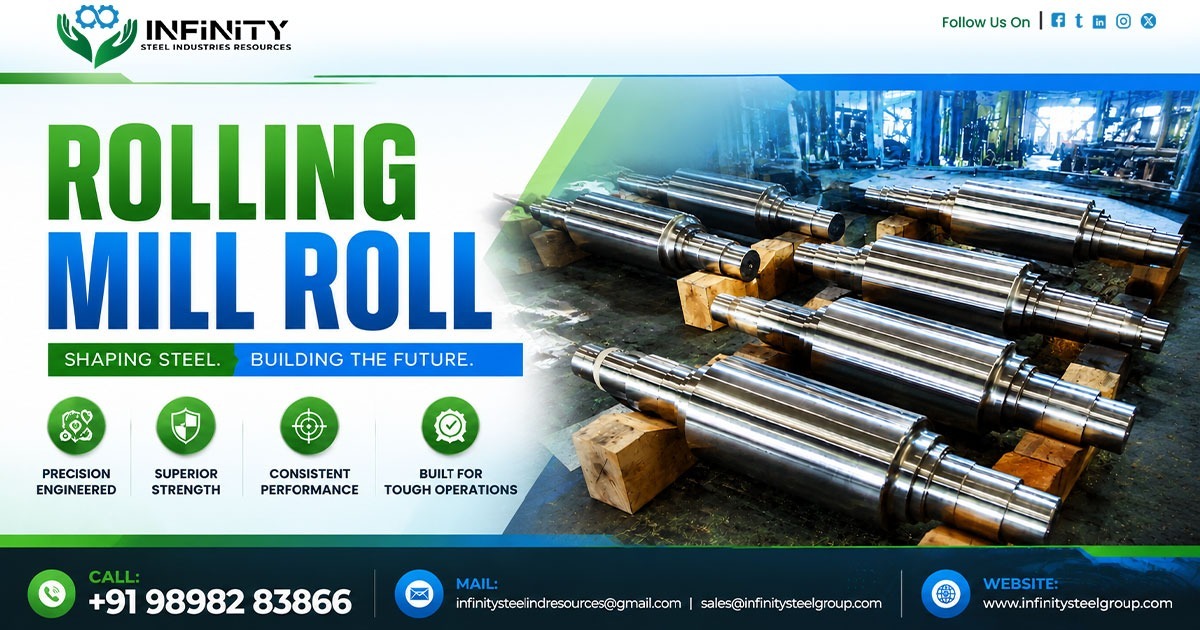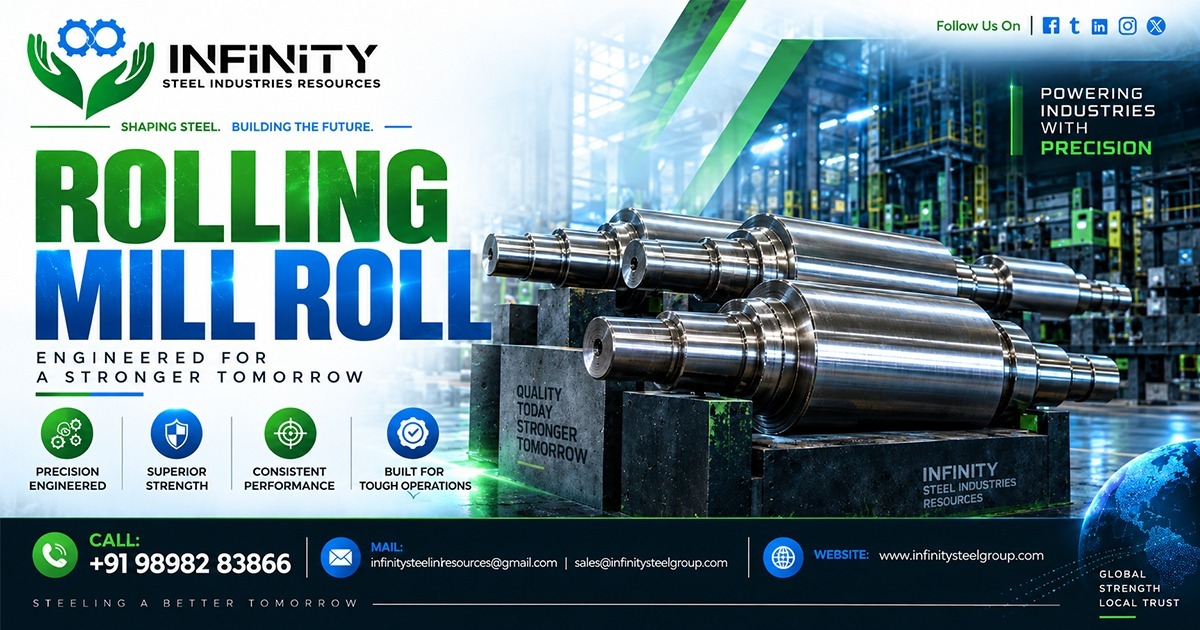
Rolling mills in the United States need rolls that match their stand design, material grade, rolling conditions, and maintenance practices. Rolling Mill Roll Exporter To United States requirements therefore begin with correct roll selection, dimensional accuracy, material verification, and dependable technical coordination.
Start With the Rolling Stand, Not Just the Roll Size
Before requesting a quotation, buyers should identify:
- Mill type and stand position
- Hot, cold, section, bar, wire rod, strip, or plate rolling
- Work roll, intermediate roll, backup roll, or other requirement
- Roll barrel diameter and face length
- Neck dimensions and bearing arrangement
- Product being rolled
- Expected rolling conditions
- Existing roll material or grade
- Required surface condition and profile
Infinity Steel Industries lists rolling mill rolls within its rolling mill solutions and provides different roll grades for applications including cold strip mills, hot strip mills, plate mills, section mills, bar mills, wire-rod mills, and other rolling operations.
Matching Roll Material With the Mill Duty
Roll material affects hardness, wear behaviour, strength, thermal response, and suitability for a particular rolling position. Choosing a harder grade is not automatically the right answer; the material must suit the actual operating duty.
Published product information from Infinity Steel Industries includes several roll categories, such as:
| Roll category | Typical consideration |
| Cr3 / Cr5 rolls | Used for specified cold strip mill positions |
| ICDP rolls | Used in hot strip and plate mill applications |
| HiCr iron rolls | Considered for hot rolling duties where the specified grade is suitable |
| HiCr steel rolls | Used for demanding hot rolling applications |
| HSS rolls | Selected where the mill design and operating conditions call for the specified material |
| Alloy chilled cast iron rolls | Used across several section, bar, wire-rod, and finishing applications |
| SG rolls | Used for profile, rod, wire, and narrow strip mill positions |
| Ductile cast iron rolls | Available in pearlitic and bainitic grades for specified mill duties |
What U.S. Buyers Should Confirm Before Ordering
A detailed technical drawing or previous roll inspection report can make the purchasing process much clearer. Buyers should send the supplier enough information to avoid dimensional or metallurgical mismatches.
The purchasing specification should ideally cover:
- Overall dimensions – Confirm barrel diameter, barrel length, total length, neck dimensions, and critical machining areas.
- Roll grade – Identify the required material or approved equivalent based on the mill’s process.
- Hardness requirement – Specify barrel and neck hardness where applicable.
- Surface condition – Clarify grinding, surface finish, profile, or other finishing requirements.
- Roll profile – Provide the required crown, contour, pass profile, or drawing where applicable.
- Bearing interface – Confirm neck dimensions and fit requirements for the existing bearing arrangement.
- Operating duty – State whether the roll will work in hot, cold, finishing, roughing, or another rolling position.
- Inspection documents – Define the reports, certificates, dimensional records, or test documentation required with the shipment.
This information helps an exporter understand the actual replacement requirement instead of supplying a roll based only on a general product description.
Quality Checks That Matter Before Shipment
For a replacement roll, quality verification should focus on parameters that affect fit and rolling performance.
A buyer can request confirmation of:
- Chemical composition against the approved grade
- Barrel and neck hardness
- Dimensional inspection
- Roll profile or contour verification
- Surface finish
- Non-destructive examination where specified
- Internal or surface defect inspection where applicable
- Heat-treatment records when required
- Material traceability documentation
- Final inspection report
Infinity Steel Industries states that its rolling mill roll production uses chemical analysis, metallurgical examination, hardness testing, ultrasonic and other inspection equipment, along with CNC machining facilities.
For U.S. buyers, the inspection plan should be agreed before production begins. This avoids uncertainty when the roll reaches the receiving plant.
Services
- Roll requirement assessment: Review mill drawings, dimensions, application, and replacement requirements.
- Material and grade coordination: Help match the requested roll type with the intended rolling duty.
- Manufacturing and inspection coordination: Support production planning, machining, heat treatment, and agreed inspection requirements.
- Export and technical assistance: Coordinate order communication, export preparation, documentation, and technical queries.
Location
For buyers across the United States, sourcing rolling mill rolls from an Indian manufacturing base can support international procurement when technical specifications, inspection requirements, packaging, and shipping arrangements are clearly defined. Relevant industrial locations include Pittsburgh, Pennsylvania, Gary, Indiana, Chicago, Illinois, Cleveland, Ohio, Detroit, Michigan, Birmingham, Alabama, Houston, Texas, Dallas, Texas, Fort Worth, Texas, Corpus Christi, Texas, Baton Rouge, Louisiana, Memphis, Tennessee, Chattanooga, Tennessee, Knoxville, Tennessee, Charlotte, North Carolina, Atlanta, Georgia, Cincinnati, Ohio, Youngstown, Ohio, Buffalo, New York, Birmingham, Alabama, and Los Angeles, California.
Rolling Mill Roll Export Support From Infinity Steel Industries
Infinity Steel Industries provides rolling mill rolls as part of its rolling mill solutions. Its published product information covers roll grades and applications for cold strip, hot strip, plate, section, bar, wire-rod, and related rolling operations.
The company states that its manufacturing unit is based in Ahmedabad, Gujarat, India. Its published infrastructure information includes melting, heat treatment, forging, testing, and machining capabilities relevant to roll production.
For a U.S. procurement requirement, buyers can discuss the required roll drawing, material grade, dimensions, hardness, application, inspection expectations, and export documentation before finalizing an order.
FAQs
Q: What information should I provide when ordering rolling mill rolls for a U.S. plant?
A: Provide the roll drawing, dimensions, mill application, material grade, hardness requirement, profile, bearing-neck details, and any inspection or documentation requirements.
Q: Can rolling mill rolls be selected for different mill applications?
A: Yes. Roll selection varies with the rolling process and stand position. Hot strip, cold strip, plate, bar, section, and wire-rod operations may require different roll grades and properties.
Q: What quality documents should a buyer request?
A: Depending on the purchase specification, buyers can request chemical analysis, dimensional inspection, hardness results, testing records, material traceability, and other agreed inspection documentation.
Q: What should be checked before installing a replacement roll?
A: Confirm dimensions, neck and bearing interfaces, alignment, surface condition, roll profile, and the condition of associated components before commissioning the roll.
Conclusion
Selecting a Rolling Mill Roll Exporter To United States requires more than comparing prices. Buyers should verify roll material, dimensions, hardness, profile, inspection requirements, packaging, and technical support. Infinity Steel Industries offers manufacturing support from Ahmedabad, Gujarat, India for international rolling-mill requirements.
Call Us:
+91 98982 83866
Email us:
infinitysteelindresources@gmail.com | sales@infinitysteelgroup.com
View Product: Click Here